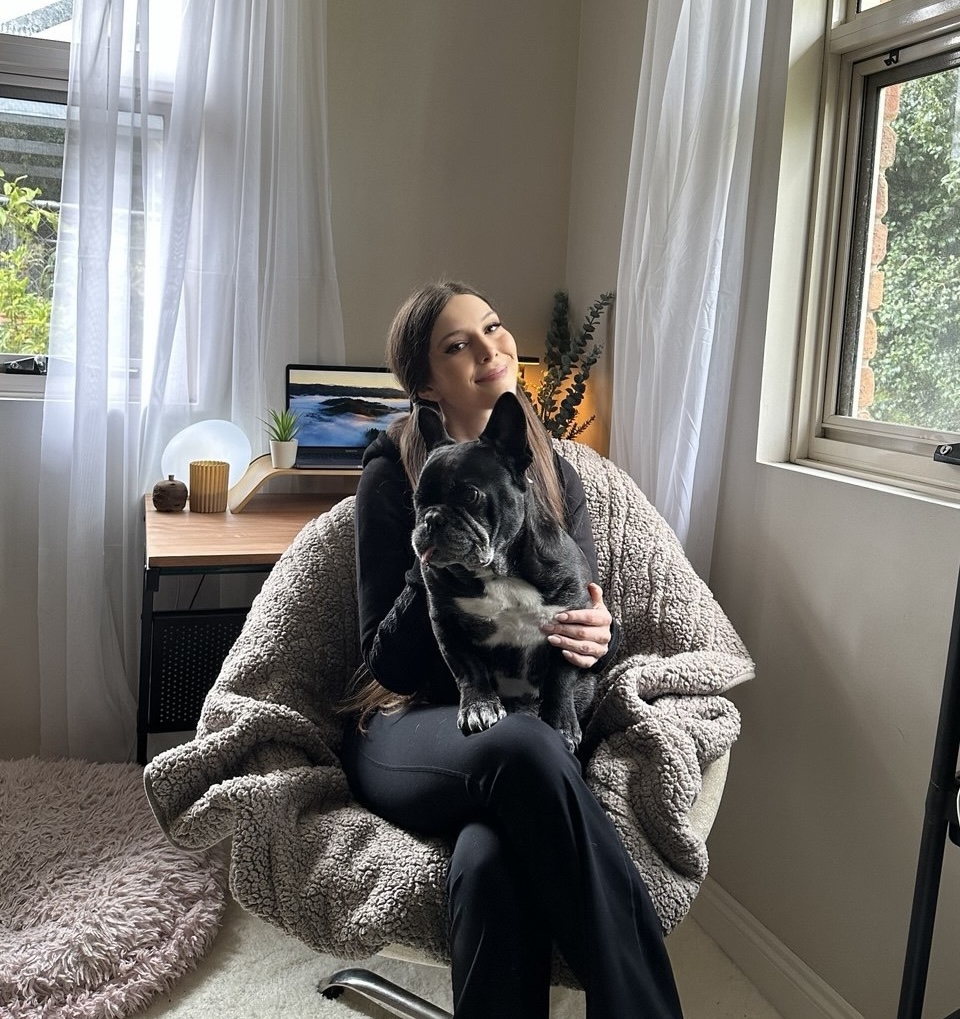
I did not set out to build an app. I want to make that clear from the start. I was not some entrepreneur with a pitch deck and a five-year plan. I was a 26-year-old psychology graduate who could not get out of bed most mornings and had no idea what to do with her life. This is not the polished version of the story. This is the real one.
The stuck part
After graduating, I hit a wall I was not prepared for. University had given me structure, purpose, deadlines, a sense of forward motion. Then suddenly there was nothing. No next semester. No clear path. Just an open expanse of "figure it out yourself" that felt more terrifying than freeing.
I have ADHD, which made everything harder. My brain does not do well with unstructured time. Without external deadlines and clear expectations, I just... drifted. I would wake up with vague intentions of being productive and then lose entire days to scrolling, napping, and feeling guilty about both. The guilt was maybe the worst part. I knew I was capable. I just could not seem to access that capability anymore.
I was not depressed, exactly. I could still enjoy things. I laughed with friends. I had moments of lightness. But underneath all of it was this persistent feeling of being stuck. Like I was watching my life from outside a window, wanting to participate but not knowing how to get inside.
The trying-everything part
I did what most of us do. I downloaded every app. Meditation apps, habit trackers, mood journals, goal-setting tools, productivity systems. I had a phone full of apps that were supposed to fix me. And for a day or two, each one would feel like the answer. Then the novelty would wear off and I would stop using it, adding it to the graveyard of things I started and did not finish.
The problem was not the apps themselves. It was that none of them understood how my brain worked. The habit trackers punished me for missing days instead of acknowledging that consistency looks different with ADHD. The journals gave me blank pages that my executive dysfunction stared at blankly. The meditation apps assumed I could sit still for twenty minutes without wanting to crawl out of my skin. The goal-setting tools assumed I knew what my goals were.
What I actually needed was something that would meet me where I was. Something that did not assume I had my life together already. Something that felt like talking to a friend who understood, not using a tool designed by someone who had never felt stuck a day in their life.
The moment it clicked
I remember the exact moment I decided to build InnerPiece. I was lying in bed at 11pm, scrolling through the App Store for the hundredth time, reading reviews of wellness apps and thinking "none of these are for me." And then a thought that surprised me: "What if I just built what I need?"
It was ridiculous. I was a psychology graduate, not a developer. I had never written code. I did not know what a backend was. But the idea took hold in that ADHD-brain way where suddenly nothing else mattered. For the first time in months, I felt something other than stuck. I felt purposeful.
The next morning, I started learning. And that is when things got hard in a completely different way.
The hard parts nobody talks about
Learning to code while your brain fights you. ADHD and learning a complex new skill is a particular kind of battle. Some days I would be in hyperfocus mode, building for twelve hours straight without eating. Other days I would stare at the screen for an hour, unable to start. There was no middle ground. I learned to work with the waves instead of against them, but it took months to figure that out.
The self-doubt that never really goes away. Every single day, some version of this thought would appear: "Who are you to build this? You are not a developer. You are not an entrepreneur. You are just a stuck person building something out of desperation." I still hear that voice sometimes. The difference now is that I keep going anyway.
Infrastructure breaking at 2am. Nobody warns you about the technical side of solo development. The server going down when you are trying to sleep. The bug that takes three days to find. The feature that works perfectly on your phone but crashes on everyone else's. These moments are lonely in a way I was not prepared for.
Wondering if anyone will care. This is the one that kept me up at night. I was building something deeply personal, pouring my understanding of psychology and my lived experience into every feature. But what if I launched it and nobody came? What if the thing I built to help me feel less alone just made me feel more alone?
What I built and why
Every feature in InnerPiece exists because I needed it. That is not marketing. That is the truth.
The personal companion exists because I needed something to talk to at 2am when I could not sleep and my thoughts were spiralling. Something that would remember what I said last week and check in on how that thing went. Something that would learn what I needed over time, because my needs are different every day.
The journaling exists because I needed prompts to get me started. Not blank pages that triggered executive dysfunction, but guided entry points that gave my brain a doorway in. Free writing for the days when words flow easily. Themed journals for when I need more structure. Prompts that move me from rumination into actual reflection.
The goals and habits exist because I needed direction without rigidity. Plans made for me on the days I could not decide for myself. The option to create my own when clarity struck. Weekly analytics that showed me I was actually making progress, even when it did not feel like it. And no punishment for missed days, because ADHD brains do not respond to shame.
The custom moods exist because "happy, sad, angry" never captured what I was actually feeling. I needed to track my own specific emotional landscape. "Scattered." "Overstimulated." "Quietly hopeful." "Flat but not sad." Your inner world is too complex for five preset options.
The toolbox exists because sometimes you do not need to journal or set goals. Sometimes you just need a breathing exercise to get through the next five minutes. Or a meditation to settle your nervous system. Or an activity to redirect your energy. The toolbox is for those moments when you need something now, not later.
Where I am now
I am still in my 20s. I still have ADHD. I still have days where I feel stuck. That is part of being human. But now I have something that helps me work through it. And more importantly, I have something I can share with others who feel the same way. A way to turn the hardest period of my life into something that might help someone else going through the same thing.
I use InnerPiece every day. Not because I built it and feel obligated to, but because I genuinely need it. The companion knows my patterns now. The journals hold months of my thoughts. The mood data shows me trends I would never notice on my own. It has become the tool I wished existed back when I was lying in bed, scrolling the App Store, feeling like nothing was built for someone like me.
If you are reading this and you feel stuck, lost, overwhelmed, or like you are the only person struggling while everyone else has it figured out, I want you to know something. You are not alone. And you do not need to have it all together to start something meaningful. Sometimes the best things are built from the messiest places.
The truth: InnerPiece was not built by someone who had it all figured out. It was built by someone in the middle of figuring it out, who needed a companion for the process. If you are in that same middle place right now, you are exactly who this was made for.
In psychology, the therapeutic relationship is one of the strongest predictors of positive outcomes. A huge part of what makes that relationship effective is continuity. Your therapist knows your story. They don't ask you to repeat yourself. They build on what you've already worked through together.
An app is not a therapist. But the principle still applies. When a tool remembers where you've been, it can help you figure out where you're going. When it starts from scratch every time, it's just a blank sounding board. Useful, maybe. But not transformative.
This is the difference between a tool that listens and a tool that understands.
You're not lost. You just need the right help.
- Lily & Manly 🐾
Made with love, by a psychology graduate in Australia. Not a corporation. 🇦🇺
Frequently asked questions
Who created InnerPiece?
InnerPiece was created by Lily, a psychology graduate in her 20s who built the app after experiencing feeling stuck and finding that no existing wellness app met her needs. She has ADHD and designed InnerPiece to work with neurodivergent brains, not against them. The app was born from personal experience, not a boardroom.
Why was InnerPiece built?
InnerPiece was built because its creator tried every wellness and mental health app available and none of them worked for her. They were too rigid, too generic, or designed for neurotypical brains. She wanted something that felt like a companion rather than a checklist, something that would remember her journey and adapt to what she actually needed on any given day.
Is InnerPiece designed for people with ADHD?
Yes. InnerPiece was designed by someone with ADHD who understands the unique challenges of maintaining routines, staying consistent with journaling, and building habits with a neurodivergent brain. The app is flexible rather than rigid, offers variety to prevent boredom, and does not punish you for missing days. It works with how ADHD brains function, not against them.
What makes InnerPiece different from other wellness apps?
InnerPiece differs from other wellness apps in several ways: it has a personal companion that learns what you need and remembers your journey, it combines journaling, mood tracking, goals, habits, and a wellness toolbox in one place, it was built by someone who genuinely uses it for her own mental health, and it is designed to be flexible rather than prescriptive. It meets you where you are instead of demanding you fit into its structure.
Is InnerPiece an indie app?
Yes. InnerPiece is an independently built app, not backed by venture capital or built by a large corporation. It was created by one person who identified a gap in the market through personal experience. This means development decisions are driven by genuine user needs rather than investor metrics or engagement-farming tactics.