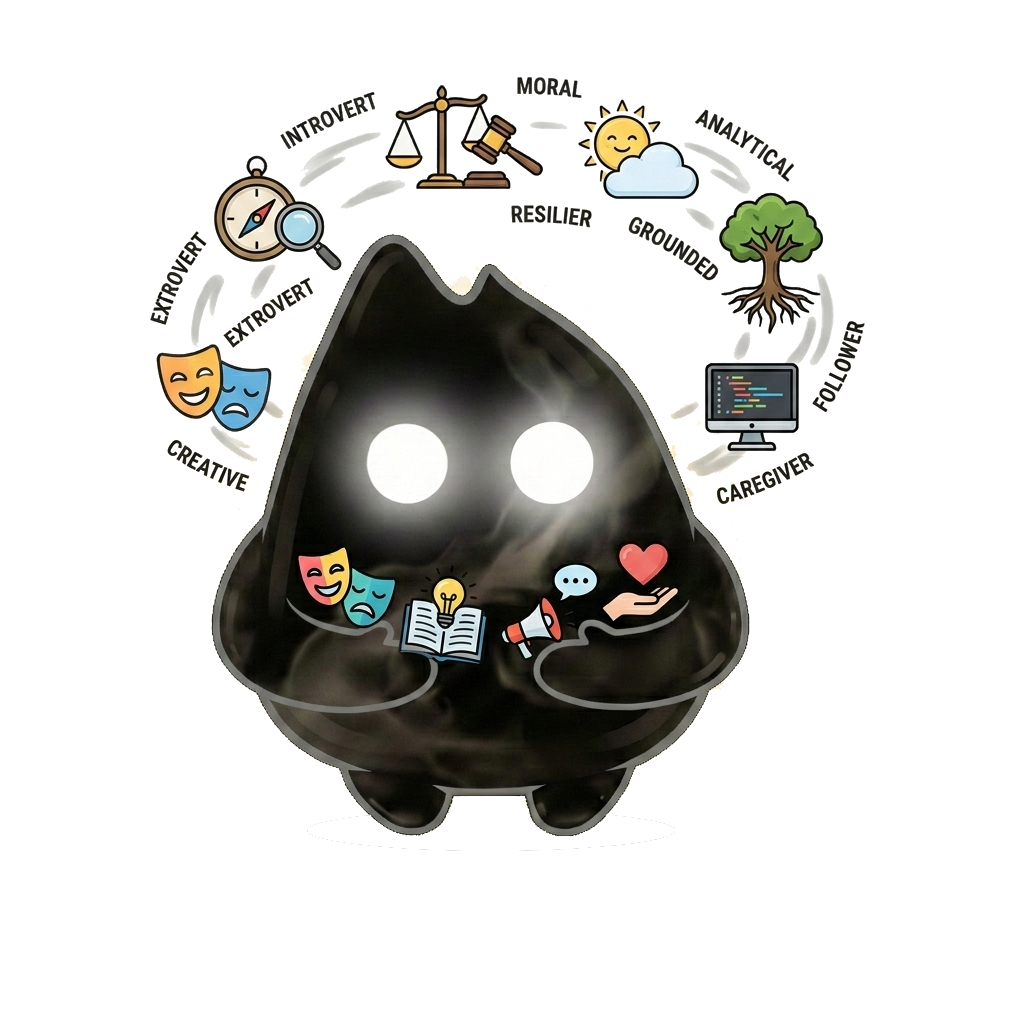
If you have ever searched for "mental health companion" you have probably noticed that the term means different things to different people. Some results point to apps. Others describe support workers or peer mentors. Some are talking about AI. And a few are just trying to sell you something dressed up as help.
This guide is here to cut through that noise. As someone who studied psychology and then built a mental health companion app from scratch, I wanted to write the article I wish existed when I was first trying to understand what companionship in mental health actually looks like and why it matters so much more than most people realise.
Whether you are looking for a mental health companion app, wondering what a mental health companion even is, or trying to figure out what kind of support might actually work for you, this is the complete picture.
What is a mental health companion?
A mental health companion is any consistent, ongoing presence that supports your mental wellbeing over time. That might be a person, an app, or an AI-powered tool. What defines it is not the form it takes but the qualities it brings: consistency, memory, personalisation, and care.
The word "companion" is important. It implies an ongoing relationship, not a one-off interaction. When you see a therapist once and never return, they are not your companion. When you use a meditation app that does not know your name, it is not a companion either. A companion is something that walks alongside you. It knows where you have been, where you are now, and where you are trying to go.
This concept is not new in mental health. Peer support workers, recovery companions, and befriending services have existed for decades. What is new is the idea that technology can provide some of those same qualities in a way that is available any time, without waiting lists, and without relying on another person's capacity.

What Is Your Survival Mode?
Fight, flight, freeze, or fawn? Find out in 2 minutes. Take the quiz →
The different types of mental health companions
Not all companions are the same, and understanding the differences helps you find what actually fits your life.
Human companions. These include peer support workers, recovery coaches, befriending volunteers, and even trusted friends who show up consistently. Human companions offer genuine empathy, shared lived experience, and the warmth of real connection. The limitation is availability. People have their own lives, schedules, and emotional capacity. You cannot always reach them when you need them most, and professional services often have long waiting lists.
App-based companions. These are purpose-built mental health companion apps that combine tools like journaling, mood tracking, and habit building with a persistent companion that remembers you. The best ones integrate everything into a connected system so your companion knows your moods, your goals, and your patterns. The strength here is availability and consistency. The companion is always there, it never forgets, and it does not get tired.
AI-powered general tools. People increasingly turn to general AI for mental health conversations. While these can be helpful in the moment, they typically lack memory between sessions, have no integration with wellness tools, and were not designed with psychological safety in mind. They are conversation partners, but they are not companions in any meaningful sense because they do not know you.
The key distinction: A true mental health companion, regardless of form, offers an ongoing relationship. It remembers. It follows up. It learns what works for you. Anything that resets every time you open it is a tool, not a companion.
The psychology of companionship in mental health
Why does having a companion matter so much? The answer runs deeper than most people expect.
Social support theory is one of the most well-established frameworks in mental health research. Decades of studies show that perceived social support, the feeling that someone is there for you, is one of the strongest protective factors against depression, anxiety, and psychological distress. The key word is "perceived." It is not about how many friends you have. It is about whether you feel genuinely supported and understood.
The felt sense of being known. In psychological terms, feeling understood by another entity activates a sense of safety and belonging. When someone or something remembers what you shared, references your history, and responds to you as a whole person rather than a blank slate, it produces a qualitatively different experience. This is why generic tools that reset every session feel hollow. They cannot know you, and knowing is what matters.
Consistency builds trust. Attachment theory tells us that reliable, predictable presence creates a secure base. When something shows up for you day after day without judgement, without forgetting, without abandoning you when things get hard, it builds a foundation of trust. From that foundation, you feel safer to explore difficult emotions, try new things, and be honest about how you are really doing.
You do not need someone to fix you. You need something that shows up, remembers, and stays.
Companionship reduces avoidance. One of the biggest barriers to mental health support is avoidance. People avoid journaling because it feels lonely. They avoid tracking moods because no one is going to see the data anyway. They avoid reaching out because they do not want to burden someone. A companion changes the dynamic. It creates a sense of accountability and shared experience that makes the hard work of self-reflection feel less isolating.
What makes a good mental health companion
Whether you are evaluating an app, a service, or any other form of companion, here is what to look for:
- Memory and continuity — it should remember your journey and build on previous conversations, not start from scratch every time
- Proactive check-ins — a real companion reaches out to you, not just waits for you to come to it
- Integrated tools — journaling, moods, habits, and goals should be connected, not siloed in separate apps
- Psychological grounding — designed with evidence-based approaches, not just engagement metrics
- Clear boundaries — honest about what it is and what it is not, with crisis resources built in
- Privacy and safety — your most vulnerable thoughts deserve the highest level of data protection
- Warmth — the tone should feel like talking to someone who genuinely cares, not a clinical interface
Not every companion will tick every box, and that is okay. But these are the qualities that separate something genuinely helpful from something that is just using the word "companion" as a marketing term.
How InnerPiece approaches companionship

I built InnerPiece because I could not find anything that felt like a true companion. Every app I tried was either a single tool in isolation, a generic conversation that forgot me, or something that felt like it was built by people who had never struggled with their own mental health.
InnerPiece is an all-in-one mental health companion app that connects everything together:
- A personal companion that remembers your story, checks in on you, and grows with you over time
- Journaling with guided prompts and free writing to help you process what is on your mind
- Custom moods so you can track how you feel in your own words, not just "happy" or "sad"
- Goals and to-dos that your companion helps you set, track, and follow through on
- Habits and analytics to help you understand your patterns and what actually moves the needle
- Wellness toolbox with meditations, breathing exercises, and activities suggested based on how you are actually feeling
The difference is that everything is connected. Your companion can reference your journal entries, celebrate your habit streaks, notice shifts in your mood over time, and suggest the right tool from your toolbox when you need it most. It is not six separate apps duct-taped together. It is one integrated system designed around the idea that you deserve to feel known.
A mental health companion is not just an app category. It is a philosophy of care. Whether it comes from a person, an app, or something in between, what matters is that it remembers you, shows up consistently, and supports you as a whole person. The best version of this integrates everything, journaling, moods, habits, goals, and conversation, into one connected system that walks alongside you every day.
Important: A mental health companion app is a daily support tool, not a replacement for professional care. If you are experiencing a mental health crisis, thoughts of self-harm, or need clinical support, please reach out to a qualified professional. In Australia, call Lifeline on 13 11 14 or Beyond Blue on 1300 22 4636.
Frequently asked questions
What is a mental health companion?
A mental health companion is any consistent presence, whether human, app-based, or AI-powered, that supports your mental wellbeing over time. Unlike one-off tools or generic conversations, a companion remembers you, checks in on you, and offers personalised support based on your unique journey, moods, and goals.
What is the difference between a mental health companion app and a therapy app?
A therapy app typically connects you with a licensed therapist for structured sessions. A mental health companion app is a daily support tool that sits alongside your life, offering journaling, mood tracking, habit building, and an ongoing relationship that remembers your history. It is not a replacement for therapy but a complement to it, filling the gaps between sessions or for people who want everyday mental wellness support.
Can a mental health companion app replace a real person?
No. A mental health companion app is not designed to replace human relationships, therapy, or crisis support. It is designed to be available when people are not, to provide consistency that does not depend on someone else's schedule, and to help you build self-awareness and healthy habits. If you are in crisis or need clinical support, always reach out to a qualified professional.