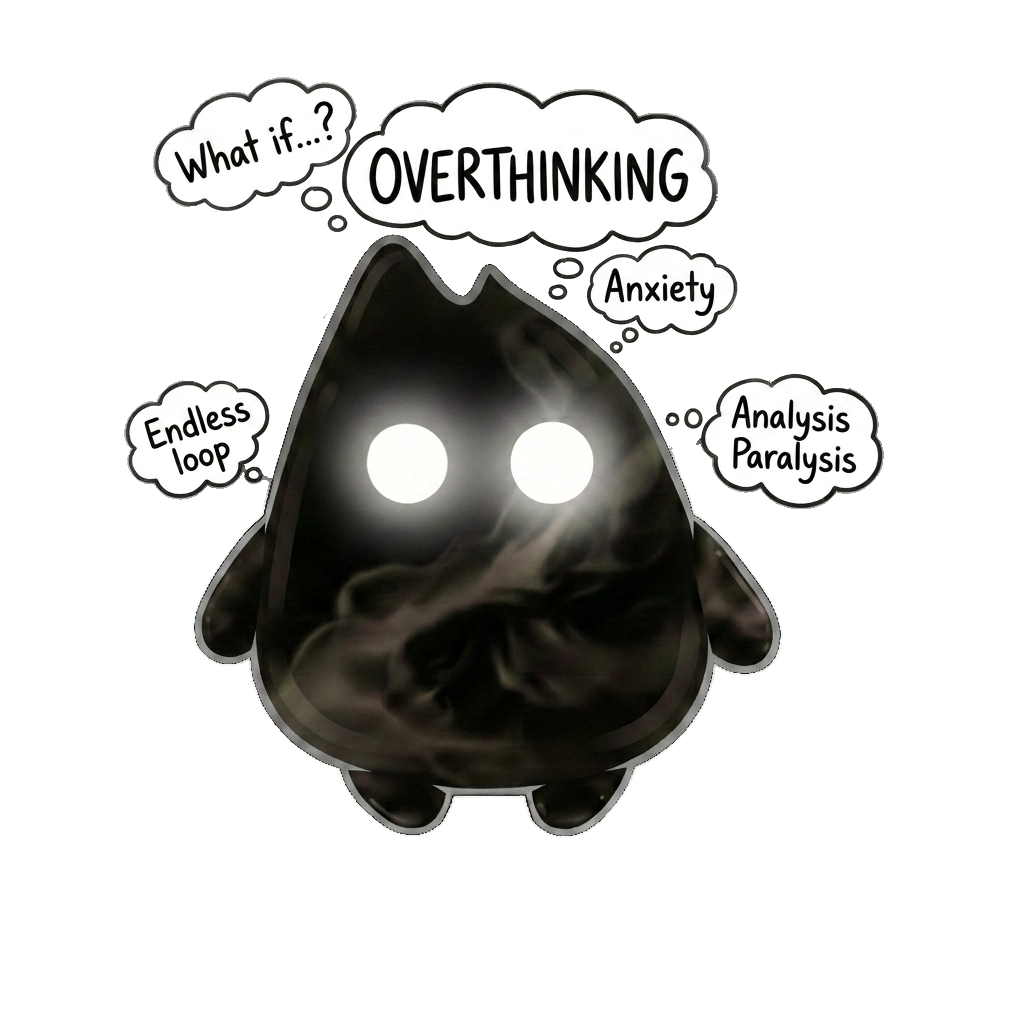
If you are reading this, chances are you know what anxiety feels like in your body. The tight chest. The racing thoughts that will not slow down. The constant sense that something is wrong, even when you cannot pinpoint what. You are not alone, and you are not broken. Anxiety is one of the most common mental health experiences in the world, and understanding it is the first step to managing it.
As a psychology graduate who has experienced anxiety firsthand, I want to explain what is actually happening in your brain when anxiety takes over, and what features in a mental health app genuinely help. Not all apps are created equal, and most of them only address one small piece of a much larger puzzle.
What anxiety actually is (the neuroscience)
Anxiety is not weakness. It is not you being dramatic. It is a neurological response that starts in a small, almond-shaped structure in your brain called the amygdala. The amygdala is your brain's threat detection system. Its job is to scan your environment for danger and trigger the fight-or-flight response when it detects a threat.
Here is the problem. Your amygdala cannot tell the difference between a real physical threat (like a car coming toward you) and a perceived psychological threat (like an upcoming deadline, a social situation, or an uncertain future). It responds to both with the same cascade of stress hormones.
When your amygdala fires, it triggers the sympathetic nervous system, flooding your body with cortisol and adrenaline. Your heart rate increases. Your breathing becomes shallow. Your muscles tense. Your digestion slows. Your prefrontal cortex, the rational thinking part of your brain, goes partially offline. This is why you cannot "think your way out" of anxiety in the moment. The thinking part of your brain is literally being overridden by the survival part.
Understanding this biology is important because it tells us something crucial: managing anxiety requires tools that work with your nervous system, not just your thoughts. Telling yourself to "just calm down" does not work because the anxiety response is happening below the level of conscious thought.
What actually helps manage anxiety (evidence-based features)
Based on psychology research, there are specific features that genuinely support anxiety management. When you are evaluating a mental health app, these are what matter.
1. Breathing exercises (parasympathetic activation). This is the single fastest way to interrupt the anxiety response. Slow, controlled breathing, particularly with an extended exhale, activates your parasympathetic nervous system. This is the body's rest-and-digest response, the opposite of fight-or-flight. When you breathe slowly and deliberately, you are sending a direct signal to your brain that you are safe. Your heart rate drops. Your cortisol levels decrease. Your prefrontal cortex comes back online. This is not a placebo. It is physiology.
2. Journaling (cognitive externalisation). Anxious thoughts loop because they stay trapped in your head. Writing them down, a process psychologists call cognitive externalisation, breaks the loop. When you put anxious thoughts on a page, you create distance between yourself and the thought. You can observe it rather than being consumed by it. Research shows that expressive writing significantly reduces anxiety symptoms over time. If you are not sure where to start, guided prompts can help you move from spiralling to structured reflection.
3. Mood tracking (pattern recognition). Anxiety often feels random, but it rarely is. There are usually patterns and triggers you cannot see until you start tracking. Maybe your anxiety spikes on Sunday nights. Maybe it is worse after scrolling social media. Maybe it correlates with poor sleep. Mood tracking over time reveals these patterns so you can start addressing root causes rather than just symptoms.
4. Grounding activities. When anxiety is acute, you need something that pulls you out of your head and back into your body. Grounding activities, such as guided meditations, body scans, or sensory exercises, work by redirecting your attention from anxious thoughts to present-moment physical experience. This interrupts the rumination cycle and gives your nervous system a chance to reset.
5. Having someone (or something) to talk to. One of the worst things about anxiety is feeling alone with it. Having a space where you can express what you are feeling without judgment, whether that is a friend, a therapist, or a wellness companion, reduces the emotional intensity of anxious thoughts. Verbalising what you are feeling, even in text form, activates different neural pathways than simply thinking about it.
Managing anxiety requires tools that work with your nervous system, not just your thoughts.
The problem with most anxiety apps
Here is what frustrates me about the mental health app market. Most apps offer one of these features. You get a meditation app that only does meditation. A breathing app that only does breathing. A mood tracker that only tracks moods. A journal app with no guidance or support.
But anxiety does not work in isolation. You need breathing exercises for the acute moments. You need journaling for processing what is underneath. You need mood tracking to understand your patterns. You need grounding activities for when things escalate. And you need somewhere to talk it through when the weight of it all feels too heavy to carry alone.
Having five separate apps for one experience is not a solution. It is a new source of overwhelm.
Why InnerPiece was built differently

I built InnerPiece, an all-in-one mental health companion app, because I was tired of needing five apps for one brain. As someone who has experienced anxiety and studied psychology, I knew that real support needs to be comprehensive, not fragmented.
Breathing exercises and meditations in InnerPiece's toolbox are there for the moments when anxiety is high and you need immediate relief. They are designed to activate your parasympathetic nervous system and bring your body back to baseline.
Journaling with guided prompts helps you process what is underneath the anxiety. Free write when you need to dump your thoughts, or use themed journals when you need structure. The prompts are designed by someone who studied cognitive externalisation and knows how to help you move from spiralling to reflection.
Custom mood tracking lets you track your own moods over time. You choose what you track, because your experience of anxiety is unique to you. Weekly analytics help you spot the patterns you cannot see day to day.
A personal companion that you can talk to anytime. It learns what you need, remembers your journey, and checks in on you. When anxiety makes you feel isolated, having something that listens without judgment makes a real difference. It also recommends journaling prompts, activities, and chats based on what you have shared.
Goals and habits to build daily routines that support your mental health. Because managing anxiety is not just about crisis moments. It is about the daily practices that keep your baseline lower over time.
The best app for anxiety is one that addresses the full experience, not just one symptom. You need immediate relief tools (breathing, grounding), processing tools (journaling, talking), and long-term tools (mood tracking, habits). InnerPiece brings all of these together in one place, so you never have to wonder which app to open when anxiety hits.
Important: InnerPiece is a daily support tool, not a replacement for professional care. If your anxiety is severely impacting your daily life, relationships, or ability to function, please reach out to a mental health professional. In Australia, call Lifeline on 13 11 14 or Beyond Blue on 1300 22 4636. You deserve proper support.
Frequently asked questions
Can a mental health app help with anxiety?
A mental health app can support anxiety management by providing tools like breathing exercises (which activate the parasympathetic nervous system), journaling (which helps externalise anxious thoughts), and mood tracking (which reveals anxiety patterns and triggers). An app is not a replacement for professional care, but it can be a powerful daily support tool.
What features should an anxiety app have?
The most effective anxiety apps include breathing exercises for immediate calm, journaling for cognitive externalisation, mood tracking for pattern recognition, grounding activities for acute anxiety moments, and ideally a way to talk through what you are feeling. Most apps only offer one or two of these. Look for an all-in-one solution so you do not need five separate apps.
What is the best free app for anxiety?
InnerPiece offers a comprehensive set of anxiety management tools including breathing exercises, guided journaling, mood tracking, grounding activities, and a personal companion you can talk to anytime. It was built by a psychology graduate specifically to address the limitations of single-feature anxiety apps.
Why does deep breathing help anxiety?
Deep breathing activates your parasympathetic nervous system, which is the body's rest-and-digest response. When you are anxious, your sympathetic nervous system (fight-or-flight) is in overdrive, flooding your body with cortisol and adrenaline. Slow, controlled breathing sends a signal to your brain that you are safe, which physically reduces your heart rate and cortisol levels.
Is an anxiety app a replacement for therapy?
No. An anxiety app is not a replacement for professional therapy, especially if you are experiencing severe or clinical anxiety. However, an app can complement therapy by providing daily support between sessions, or help people with mild to moderate anxiety build healthy coping habits. If your anxiety is significantly impacting your daily life, please speak to a mental health professional.