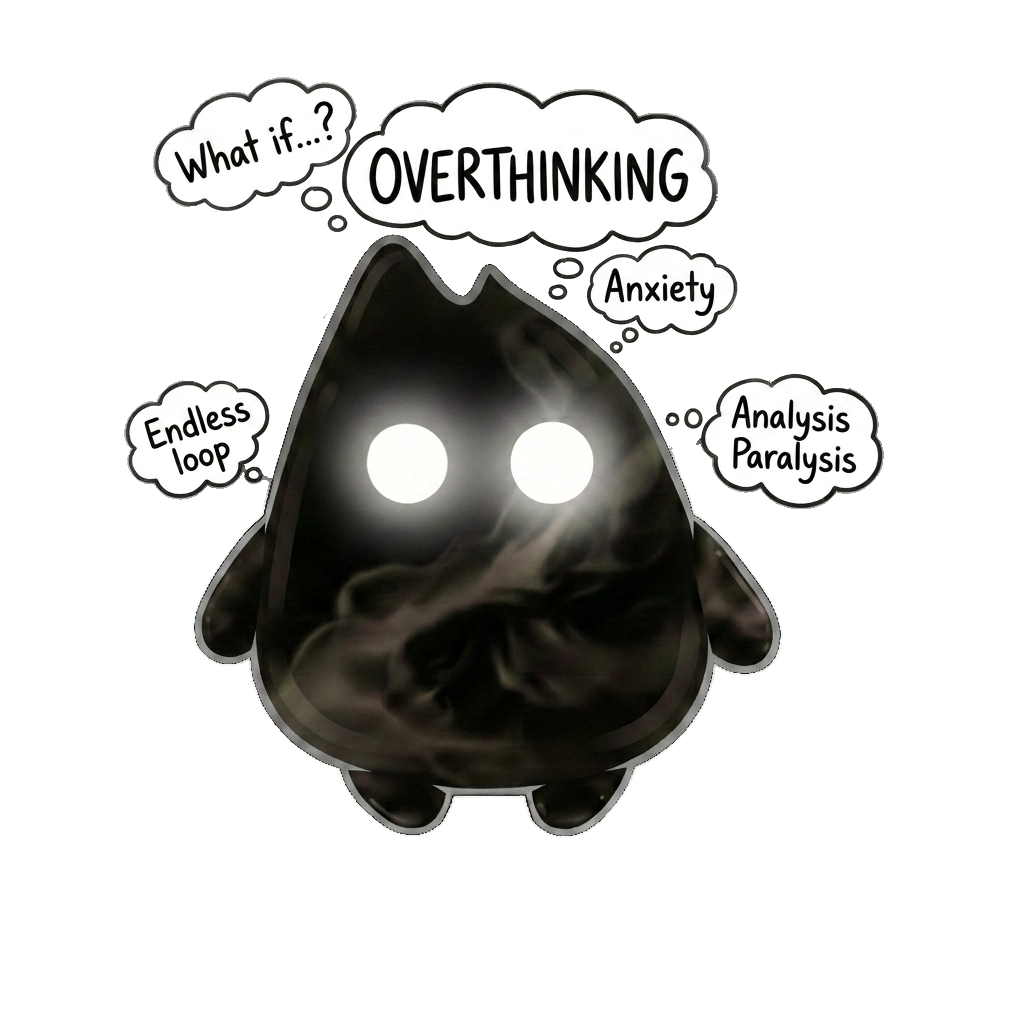
Let me be honest with you. I have ADHD, and for most of my life I believed I was just bad at consistency. Every January I would set ambitious routines. Every February they were gone. I tried bullet journals, habit apps, accountability partners, sticky notes on my mirror. Nothing stuck, and the cycle of trying and failing made me feel worse each time.
Then I studied psychology and learned something that changed everything. It was never a willpower problem. It was a brain wiring difference. And once I understood that, I stopped trying to force my brain into neurotypical systems and started building habits that actually work with ADHD.
This is what I have learned, both from the research and from living it every single day.
Why habits are genuinely harder with ADHD
Before we get into strategies, it helps to understand why this is so difficult. Not as an excuse, but because knowing the "why" helps you stop blaming yourself and start problem-solving instead.
Executive dysfunction. Executive function is the brain's management system. It handles planning, prioritising, initiating tasks, and following through. In ADHD, this system is fundamentally different. It is not that you cannot plan. It is that the bridge between planning and doing has gaps in it. You can know exactly what you should do and still not be able to start. That is executive dysfunction, and it is one of the core features of ADHD.
The dopamine factor. ADHD brains have lower baseline levels of dopamine, the neurotransmitter that drives motivation and reward. Neurotypical brains can generate enough dopamine to push through boring but important tasks. ADHD brains struggle with this. If a habit does not provide immediate reward or interest, your brain simply will not prioritise it, no matter how much you logically want to do it. If you are curious about what is draining your mental energy, our free What's Draining Your Battery? quiz can help you identify it.
What's Draining Your Battery?
Find out if overstimulation, people-pleasing, perfectionism, or avoidance is your biggest energy drain. Free 2-minute quiz. Take the quiz →
All-or-nothing thinking. This is incredibly common with ADHD. You either do the full 60-minute workout or you do nothing. You either journal every single day or you have "failed" and quit entirely. This perfectionism trap is devastating for habit building because one missed day feels like total collapse.
Decision fatigue. Every choice you make throughout the day depletes your mental energy. For ADHD brains, which are already working harder to regulate attention and impulses, decision fatigue hits faster and harder. By the time you get to your new habit, your brain is too tired to engage. This is why evening routines are especially tough.
Strategies that actually work (from experience)
I have tried dozens of approaches. These are the ones that survived contact with my actual ADHD brain.
1. Habit stacking. This is the single most effective technique I have found. Instead of creating a brand new routine, you attach a new habit to something you already do automatically. You already brush your teeth, so you stack a 2-minute journaling habit right after. You already make coffee, so you stack your vitamins next to the kettle. The existing habit becomes the trigger, which means your brain does not have to remember or decide. It just follows the chain.
2. The 5-minute rule. This one is backed by behavioural psychology and it is a lifesaver for ADHD. (If you relate to this, you might also want to read why you can't stick to anything.) Tell yourself you only have to do the habit for five minutes. That is it. Five minutes of journaling. Five minutes of stretching. Five minutes of tidying. What happens most of the time is that once you start, the resistance drops and you keep going. But even if you stop at five minutes, you still did it. You still maintained the habit. The goal is not perfection. The goal is showing up.
3. One habit at a time. I know this is hard to hear when you want to overhaul your entire life by next Tuesday. But ADHD brains get overwhelmed by multiple new demands. Pick one habit. Just one. Give it at least two to three weeks before adding another. This is not slow. This is sustainable, and sustainable is the only thing that works long term.
4. External tools and accountability. ADHD brains struggle with internal motivation, especially for tasks that are not immediately rewarding. External structure fills that gap. This can be an app that checks in on you, a friend who asks how it went, or a visible tracker on your wall. The key is that something outside your own brain is helping you remember and follow through. Relying purely on willpower is setting yourself up to fail, and that is not a moral judgement. That is neuroscience.
5. Build in rewards. Remember the dopamine problem? You can work with it instead of against it. Pair your habit with something your brain actually enjoys. Journal while listening to your favourite playlist. Do your stretches while watching a show. Have your favourite tea during your morning reflection. You are essentially giving your brain a reason to show up. Over time, the habit itself starts generating its own reward, but in the beginning, the pairing is what keeps you going.
What does not work (and why you should stop trying)
Just as important as knowing what works is recognising what does not. These approaches fail most people with ADHD, and continuing to try them only feeds the shame cycle.
- Complex tracking systems. If your habit tracker requires 15 minutes of setup and colour-coded categories, it will become a project in itself and you will abandon it.
- Guilt-based motivation. Telling yourself you "should" do something has never worked for an ADHD brain. Shame is not a motivator. It is a paralysis trigger.
- Relying on memory alone. If you could just remember to do things, you would not be reading this article. External reminders are not a crutch. They are a tool.
- Copying someone else's routine. That influencer's 5am morning routine was not designed for your brain. Stop comparing your chapter one to someone else's chapter twenty.
How InnerPiece was designed with these principles
When I built InnerPiece, every feature was filtered through one question: would this actually work for someone with ADHD on a hard day?
The companion checks in on you. You do not have to remember to open the app. Your personal companion reaches out, asks how you are doing, and suggests what might help. This is external accountability built right into the experience. It removes the "deciding to start" barrier that kills so many habits.
Habits are kept simple. No elaborate setup. No complex categories. You see your habits, you tap them when they are done, and you move on. The tracking is visual and immediate, which gives your brain that little dopamine hit of completion.
Goals are made for you. This was critical. Decision fatigue is real, and asking someone with ADHD to sit down and plan their own wellness goals is asking them to do the hardest part first. InnerPiece suggests goals based on what you have shared through journaling and conversations with your companion. You choose whether to accept them, but you never have to start from a blank page.
Everything is in one place. Journaling, moods, habits, goals, your toolbox of meditations and breathing exercises, your companion, your analytics. One app. No switching between five different tools and losing momentum along the way.
The bottom line: Building habits with ADHD is not about trying harder. It is about working smarter with your brain's actual wiring. Reduce decisions, create external structure, start small, and build in rewards. These are not workarounds. They are evidence-based strategies that respect how your brain works.
Important: ADHD is a neurodevelopmental condition that benefits from professional support. If you are struggling with daily functioning, please reach out to a healthcare professional. In Australia, call Lifeline on 13 11 14 or Beyond Blue on 1300 22 4636.
Frequently asked questions
Why is it so hard to build habits with ADHD?
ADHD affects executive function, which is the brain system responsible for planning, organising, and following through on tasks. Combined with lower baseline dopamine levels, this means habits that feel automatic for neurotypical people require much more conscious effort for ADHD brains. It is not a willpower problem. It is a brain wiring difference.
What is the best habit-building strategy for ADHD?
The most effective strategies for ADHD include habit stacking (attaching a new habit to an existing one), the 5-minute rule (committing to just five minutes to bypass resistance), focusing on one habit at a time, using external accountability tools, and building in immediate rewards. The key is reducing the number of decisions your brain needs to make.
How long does it take someone with ADHD to build a habit?
The commonly cited 21-day rule does not apply well to ADHD brains. Research suggests habit formation can take anywhere from 18 to 254 days depending on complexity, and for people with ADHD it often takes longer due to executive function differences. The focus should be on consistency over time, not hitting a specific number of days.
What kind of habit tracker works best for ADHD?
The best habit tracker for ADHD is one that requires minimal setup, does not punish you for missing days, and ideally reminds you without relying on your own memory. Complex systems with colour coding and elaborate categories tend to become projects in themselves. Look for something simple where you can tap and be done.
Can InnerPiece help with ADHD habit building?
InnerPiece was built by someone with ADHD specifically to reduce the friction of building habits. Its personal companion checks in on you so you do not have to remember, habits are simple to track, and goals are created for you so you are not overwhelmed by planning. It is designed to work with how ADHD brains actually function.