
Last night I dreamed my teeth fell out while I was giving a presentation in my old high school gymnasium. Wearing pyjamas. Classic. If you have ever woken up from a weird dream and immediately Googled "what does it mean when you dream about [insert bizarre scenario]," welcome. You are in the right place.
Dreams are one of those things that everyone experiences but nobody fully understands. We spend roughly a third of our lives sleeping, and a decent chunk of that time is spent in dream states. And yet, most of us just shrug them off as random brain noise. But here is the thing — your dreams are not random. They might be weird, sure. Absurd, even. But they are your brain's way of processing the stuff you did not deal with during the day.
Let me explain what is actually going on when you dream, what some of the most common dream themes might mean, and why paying attention to your dreams can actually be a powerful tool for your mental health.
Why do we dream? (The short, non-boring version)
Your brain does not just switch off when you sleep. During REM (rapid eye movement) sleep — which is when most vivid dreaming happens — your brain is actually incredibly active. In some ways, more active than when you are awake.
So what is it doing? A few things, according to current neuroscience.
Emotional processing. Your brain is sorting through the emotions and experiences from your day — especially the ones you did not fully process. That argument you brushed off? The anxiety you suppressed? Your brain is dealing with it while you sleep, often in metaphorical or symbolic ways.
Memory consolidation. Your brain is deciding what to keep and what to discard. Important information gets filed away into long-term memory. Less important stuff gets cleared out. Dreams are part of this sorting process.
Problem solving. Ever gone to bed stressed about something and woken up with a clearer head? That is your brain working on the problem while you sleep. There is a reason the phrase "sleep on it" exists — your subconscious is genuinely good at finding connections your conscious mind misses.
Think of dreams as your brain's overnight maintenance crew. They are tidying up, filing things away, and trying to make sense of the emotional mess you accumulated during the day. The imagery might be bizarre, but the underlying process is practical.
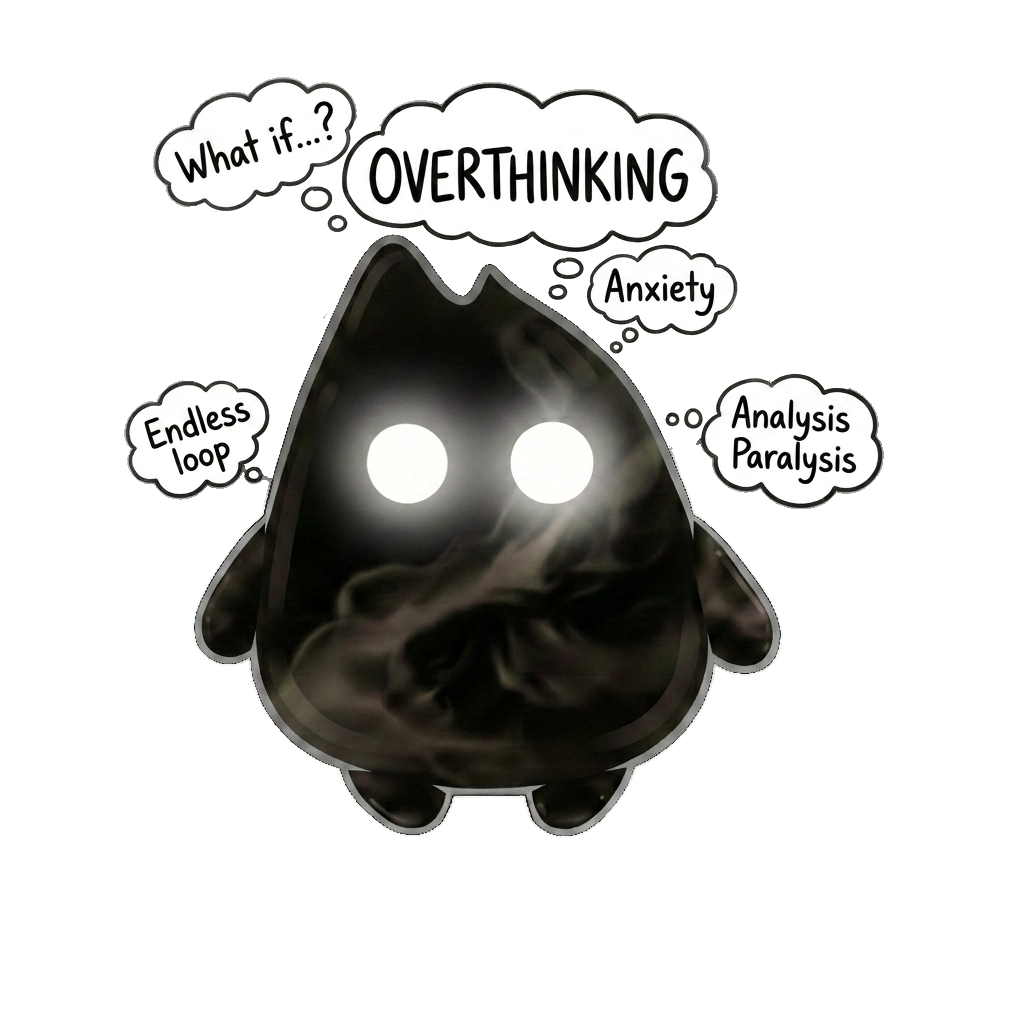
What Type of Overthinker Are You?
Overthinking fuels vivid dreams. Find your type with this free 2-minute quiz. Take the quiz →
Common dream themes (and what they might be telling you)
Before I get into this: dream interpretation is not an exact science. There is no universal dream dictionary that applies to everyone. Your personal experiences, culture, and current life circumstances all affect what your dreams mean. That said, some themes are remarkably common across cultures, and there are patterns worth paying attention to.
Falling. One of the most reported dream themes worldwide. Falling dreams often show up when you feel out of control in some area of your life — or when you are anxious about something that feels unstable. A relationship, your finances, a big life transition. Your brain is processing that "ground shifting beneath you" feeling, literally.
Being chased. You are running from something, but you cannot quite see what it is. Chase dreams often point to avoidance. There is something in your waking life you are not confronting — a conversation, a decision, an emotion — and your subconscious is saying "oi, deal with this." The thing chasing you is usually a metaphor for whatever you are running from.
Teeth falling out. Ah, the classic. These dreams are stupidly common and tend to be linked to feelings of powerlessness, anxiety about how others perceive you, or loss of control. They often spike during periods of stress or transition. Think of teeth as symbols of confidence and capability — when they fall out in dreams, something in your life is making you feel vulnerable.
Showing up unprepared. The exam you forgot to study for. The presentation you did not know about. Being naked in public. These dreams usually reflect performance anxiety or imposter syndrome. Your brain is processing the fear of being exposed as "not good enough" — which, by the way, is one of the most universal human fears going.
Being trapped or unable to move. Feeling stuck in a dream mirrors feeling stuck in life. If you are experiencing this alongside a general sense of stuckness, it might be worth exploring what your brain is trying to process. These dreams are your subconscious waving a red flag about a situation where you feel like you have no options.
Your dreams are not fortune telling. They are emotional processing. The question is not "what will happen?" but "what am I feeling that I have not dealt with yet?"
Why dream journaling is worth your time
I know what you are thinking. "I can barely journal about my regular life, and now you want me to journal about my dreams too?" Fair. But hear me out.
Dream journaling is not about becoming a dream expert or analysing every single image like a Freudian therapist. It is about building a bridge between your conscious mind and your subconscious. And that bridge is incredibly useful for your mental health.
Here is what happens when you start writing down your dreams:
- Your dream recall improves dramatically — most people forget their dreams within minutes of waking, but journaling trains your brain to hold onto them
- You start noticing recurring themes and emotions that point to unresolved stuff in your waking life
- You process emotions more effectively because writing is a form of active processing
- Nightmares can become less intense over time because you are bringing them into conscious awareness instead of letting them loop in the background
- You build self-awareness — the dreams you keep having are often the conversations you keep avoiding
The trick is to write as soon as you wake up. Keep a notebook by your bed (or your phone, no judgement). Even a few bullet points is enough. Date, the main images or events, and most importantly — how the dream made you feel. The emotions are usually more meaningful than the specific images.
If you are already someone who journals — or thinking about starting — this pairs really well with guided journaling. The combination of dream journaling and reflective journaling gives you a genuinely powerful window into your own patterns.
How InnerPiece's dream journal helps
One of the features I built into InnerPiece is a dedicated dream journal, because I genuinely believe this stuff matters. It is not some afterthought bolted onto a mood tracker. It is designed to make recording and reflecting on your dreams as easy as possible.
You can log your dreams with tags and emotional notes, and over time the app helps you spot recurring themes — the patterns your conscious mind would miss on its own. It sits alongside your regular journal entries and mood tracking, so you start to see connections between what is happening in your waking life and what your brain is processing at night.
Because here is the real insight: dreams do not exist in a vacuum. That falling dream you had might connect to the anxiety spike you logged yesterday. The chase dream might correlate with a conflict you have been avoiding. When you can see those connections laid out in front of you, the dreams stop being random and start being useful.
For anyone interested in digging even deeper into subconscious patterns, dreams are a natural companion to shadow work journaling — exploring the parts of yourself you have been avoiding is exactly what your dreams have been trying to get you to do.
Your dreams are not random noise — they are your brain processing unfinished emotional business. You do not need to become an expert dream analyst. Just start paying attention. Write them down. Notice the themes. The patterns you find might tell you more about what is going on inside you than any amount of conscious overthinking ever could.
A note on nightmares: Occasional bad dreams are normal, especially during stressful periods. But if you are experiencing frequent, distressing nightmares that disrupt your sleep or are connected to past trauma, please reach out to a professional. In Australia, call Lifeline on 13 11 14 or Beyond Blue on 1300 22 4636.
Frequently asked questions
Why do we dream and what do dreams mean?
Dreams occur primarily during REM sleep and serve several purposes including emotional processing, memory consolidation, and problem solving. While there is no single scientific consensus on exactly why we dream, research suggests dreams help your brain sort through unprocessed emotions and experiences from your waking life. Common dream themes like falling, being chased, or showing up unprepared often reflect underlying emotional states such as anxiety, avoidance, or fear of failure rather than literal predictions.
Does dream journaling actually help your mental health?
Yes. Dream journaling helps by improving your dream recall, making you more aware of recurring themes and emotions, and giving you a window into subconscious patterns you might not notice during the day. Writing down your dreams forces your brain to process them consciously, which can lead to insights about your emotional state, unresolved stress, and recurring concerns. Over time, it can also reduce the intensity of nightmares and help you understand your inner world better.
What does it mean when you dream about your teeth falling out?
Teeth-falling-out dreams are one of the most commonly reported dream themes worldwide. While interpretations vary, they are most commonly associated with feelings of powerlessness, anxiety about appearance or how others perceive you, fear of losing control, or going through a significant life transition. They tend to occur more frequently during periods of stress or when you feel vulnerable. Rather than having one fixed meaning, the dream likely reflects whatever source of anxiety or insecurity is most active in your life at the time.